
|
 RISTORANTE IL FIENILE
Address: Fraz. Castelluccio - Norcia ph. 0743 821194 mobile: 331 8250761 E-mail: |

|

|
After the earthquake:
 structure CLOSED
|
|
RISTORANTE IL FIENILE
Address: Fraz. Castelluccio - Norcia ph. 0743 821194 mobile: 331 8250761 E-mail: |
|
|
structure CLOSED
 Storia e curiosità
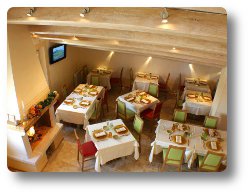
The restaurant, ‘The Hay barn’, is located in an old barn where the
hay was stored in winter for our cows. Today the restaurant is on the second
floor of the renovated Antica Cascina Brandimarte or the Old Dairy Brandimarte
and it represents a link between past and present. The kitchen offers dishes for
which Castelluccio is famous, made from produce grown on the farm, or with high
quality products purchased from local farmers including breeders who have a
track record of producing safe, excellent meats. In the kitchen Mrs Maria Rita
Brandimart prepares the dishes based on what she learned from her mother Adua.
Nothing seems to have changed when you taste the old-fashioned style pasta,
soups, local meat and sweets.
I nostri piatti per il Menù della Sibilla
Homemade noodles with roveja (Available all year)
The goodness of this dish lies in the texture of the homemade noodle, made with
love and porous enough to hold the tasty flavour of the sauce. The delicate
flavour of roveja, a variety of wild pea grown in fields of Castelluccio,
enriches the undisputed goodness of the pasta. The dish is finished with a
garnish of parsley to give colour and freshness, and Umbrian olive oil for a
definite and rotund touch.
Cosa c'è nel piatto
The products used...
Roveja is a wild variety of pea, known since Neolithic times but
it has almost disappeared from cultivation. While there are various pea
cultivators, roveja is only found in Central Italy where it is cultivated
principally in the Marche and in Umbria by farmers who want to diversify and who
appreciate ancient traditions. It is sown in March and the pods ripen in July.
They can also be harvested when ripe and have a more floury taste as compared to
common peas. Initially the pod of the roveja pea is green but when mature it
becomes a dark purple. The colour of the fresh seeds can vary from green to
grey, while the dried seeds tend to dark brown. The flowers are purple.
...And their producers
The farm of Brandimart Maria Rita, via Libya, 58 – Castelluccio,
Norcia (PG)
Place of production
Castelluccio di Norcia
Production Method
The farming of this crop is made possible by flourishing, natural,
untouched land such as that found around Castelluccio, without pesticides,
herbicides and chemical fertilizers.
These products help biodiversity
Traditional agricultural practices without the use of
herbicides, pesticides and chemical fertilizers, encourage the presence of a
great variety of plant species, which generate the spectacular colourful flowers
for which the Plains of Castelluccio are world famous. Many animal species are
undoubtedly assisted by these healthy environmental conditions. In particular,
the presence of many species of insects creates the necessary condition for
other animal species, particularly birds that feed upon insects. The most
significant species of this environment is the partridge, a galliforme that was
once widespread but whose particular type, the ‘italiaca’, has now virtually
disappeared. Typically the partridge lives in environments where traditional
agriculture is practiced and it has colonized the Plains of Castelluccio,
although this land is located at a higher altitude than is usual for the
species. Other species characteristic of this type of farming are different
granivorous and insectivorous passerines and small prey, such as the kestrel and
the lesser kestrel.
Copyright © 2015 Parco Nazionale dei Monti Sibillini
Tutti i diritti riservati - All rights reserved
Revised -- 11.05.2015
URL:
http://www.sibillini.net/en/chiedi_sibilla/menuDellaSibilla/ristoranti.php?id_anagrafe_struttura=350