
|
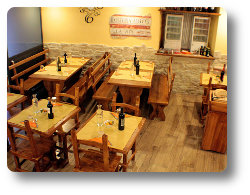
 RISTORANTE SIENTI'N PUò
Address: Corso Sertorio, 46 - Norcia ph. 0743 816335 mobile: E-mail: info@ristorantenorcia.it |

|

|
After the earthquake:
 structure accessible
|
|
RISTORANTE SIENTI'N PUò
Address: Corso Sertorio, 46 - Norcia ph. 0743 816335 mobile: E-mail: info@ristorantenorcia.it |
|
|
structure accessible
 Storia e curiosità
Our restaurant derives its name from the oldest fair in Norcia where
with the words: “Sienti ‘n può” and the sentence, “Quanto vuoi per venire a
lavorare da me? ("How much will you charge to come and work for me?”) were the
customary start of the negotiations between the master of charcuterie (in Norcia
or in Tuscany), and a butcher who would be hired to work seasonally in the
winter.
 I nostri piatti per il Menù della Sibilla
Organic farro soup (Available all year)
The production of organic farro is a family business, and it is cultivated as
our grandparents did, in fields that are located over 1000 meters altitude. The
dish is seasoned with sautéed vegetables from our garden, served with our own
homemade pecorino cheese and a drizzle of extra virgin olive oil. It is a real
specialty that befits every season.
 Cosa c'è nel piatto
The products used...
Organic farro.
...And their producers
Farm of “Santoni Giovanna”.
Place of production
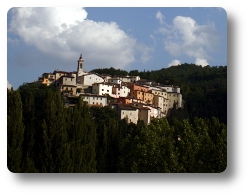
The arable fields are located in Montebufo (Preci)
Production Method
Organic certification (Certificato ICEA Biologico operatore
controllato N°L 128 organismo di controllo autorizzato dal
MIPAAF IT-BIO-006-Agricoltura Italia)
These products help biodiversity
Farro is a grain that adapts well to poor, rocky soil in
uplands and is resistant to harsh winters, as well as conditions of dryness or
humidity. Hence, it is generally grown in marginal areas and in small plots like
those within the Monti Sibillini. Organic farming represents an added value to
both the product and the environment. Each step of the process in organic
production is designed to maintain and increase the diversity of plants and
animals, whose presence helps to maintain a balanced agro-ecosystem. These
cultivation methods create good soil fertility obtained with the help of the
presence of microorganisms instead of chemical fertilizers. Simultaneously this
manner of cultivation guarantees protection of the hedges and rows of trees near
the fields. This practice is a factor of great ecological importance because
these buffer zones provide shelter and food for a wide range of living
organisms, as well as being a typical element of the rural landscape.
Copyright © 2015 Parco Nazionale dei Monti Sibillini
Tutti i diritti riservati - All rights reserved
Revised -- 11.05.2015
URL:
http://www.sibillini.net/en/chiedi_sibilla/menuDellaSibilla/ristoranti.php?id_anagrafe_struttura=355